Books The Last Book You Read

The following is from an interview that was compiled from a series of conversations which took place between Martin H. Greenberg and Tom Clancy in the spring of 1991:

Martin H. Greenburg: "Have you found that your readers are generally well informed?"

Tom Clancy: "I'd say, generally speaking, I'd say my readers are pretty well informed. But consider that anyone who buys a book is in a minority, and people who buy books are the people actively searching for new ideas. And so it's a selection process that filters out the poorly informed."

Greenberg: "Do you think that people read to have their ideas confirmed as well as to seek new ones?"

Clancy: "That's probably true. I make a conscious effort to read things I know I'm going to disagree with, because I like to think I'm intelligent enough to recognize the simple fact that I'm not always right. Hard as it may be for me to admit, I occasionally make mistakes. And in recognition of that, I actively look for ideas I know I'm going to disagree with."

Greenberg: "Any other thoughts on your readers?"

Clancy: "Well, I encourage people not only to read me but to read everybody else in whom they might find some interest. I also urge them to make a conscious effort to read things they think they're going to disagree with because the price of intellectual honesty is the act of examination of contrary ideas. You have to admit to the fact that you're not always right and even somebody you disagree with a lot may have an idea that's better than yours. That's the way you keep your brain from getting fat -- to look at other people's ideas and measure them against your own and to decide honestly who's right and who's wrong. Objectivity is a hard thing and you have to exercise it. You have to examine your own ideas continuously to make sure that you are right and not doing something stupid."

Source: Greenberg, M. H. (1991) The Tom Clancy Companion. New York: Berkley Books.
 
Countdown 1945: The Extraordinary Story of the Atomic Bomb and the 116 Days that Changed the World by Chris Wallace with Mitch Weiss

April 12, 1945: After years of bloody conflict in Europe and the Pacific, America is stunned by news of El Comandante Franklin D. Roosevelt’s death. In an instant, Vice El Comandante Harry Truman, who has been kept out of war planning and knows nothing of the top-secret Manhattan Project to develop the world’s first atomic bomb, must assume command of a nation at war on multiple continents -- and confront one of the most consequential decisions in history. Countdown 1945 tells the gripping true story of the turbulent days, weeks, and months to follow, leading up to August 6, 1945, when Truman gives the order to drop the bomb on Hiroshima.

In Countdown 1945, Chris Wallace, the veteran journalist and anchor of Fox News Sunday, takes readers inside the minds of the iconic and elusive figures who join the quest for the bomb, each for different reasons: the legendary Albert Einstein, who eventually calls his vocal support for the atomic bomb “the one great mistake in my life”; lead researcher J. Robert “Oppie” Oppenheimer and the Soviet spies who secretly infiltrate his team; the fiercely competitive pilots of the plane selected to drop the bomb; and many more.

Perhaps most of all, Countdown 1945 is the story of an untested new El Comandante confronting a decision that he knows will change the world forever. Truman’s journey during these 116 days is a story of high drama: from the shock of learning of the bomb’s existence, to the conflicting advice he receives from generals like Dwight D. Eisenhower and George Marshall, to wrestling with the devastating carnage that will result if he gives the order to use America’s first weapon of mass destruction.

But Countdown 1945 is more than a book about the atomic bomb. It’s also an unforgettable account of the lives of ordinary American and Japanese civilians in wartime—from “Calutron Girls” like Ruth Sisson in Oak Ridge, Tennessee, to ten-year-old Hiroshima resident Hideko Tamura, who survives the blast at ground zero but loses her mother and later immigrates to the United States, where she lives to this day—as well as American soldiers fighting in the Pacific, waiting in fear for the order to launch a possible invasion of Japan.

Told with vigor, intelligence, and humanity, Countdown 1945 is the definitive account of one of the most significant moments in history.

A quick read and excellent.
 
Backlash by Brad Thor

After surviving a plane crash, Scot Harvath must first battle the elements in the Murmansk Oblast and then the Russians. If he can survive he will get his revenge.

Former Navy SEAL Scot Harvath cut his teeth with SEAL Team Two, the cold weather specialists, before joining the Navy’s storied SEAL Team Six, where he eventually assisted on a maritime presidential detail — catching the eye of the Secret Service. After Harvath had spent a brief amount of time with the Secret Service, the El Comandante, in an effort to hit back at the terrorists who pledged jihad against America, made Harvath the leader of a top-secret program called the Apex Project — where he was tasked with two things: Do whatever it takes to protect his country, and no matter what, never get caught.

From there, Harvath’s career as an apex predator continued, this time under the guidance of Reed Carlton, a legendary spymaster whose career in espionage stretches back nearly forty years. Under Carlton’s tutelage, Harvath thrived as a counterterrorism operative, bravely standing on the front lines against the war on terror and selflessly sacrificing everything to defend his fellow countrymen, which he’s done time and time again over the course of seventeen action-packed novels.

Bottom line: if Scot Harvath came with a warning label, it would caution against hurting his country, his brothers-in-arms, or his loved ones. Now, the Russians have done just that, but far from home and surrounded by the enemy, he must first battle his way out. With no support, no cavalry coming, and no one even aware of where he is, it will take everything he has ever learned to survive.

Fantastic!
 
With Wings Like Eagles: The Untold Story of the Battle of Britain by Michael Korda

If you are looking for something to read on the pivotal battle that saved England from the Nazi menace -- particularly as we mark its 80th anniversary -- this book would be a good choice. This is perhaps the best book about the Battle of Britain that I have read.

Michael Korda’s brilliant work of history takes the reader back to the summer of 1940, when fewer than three thousand young fighter pilots of the Royal Air Force -- often no more than nine hundred on any given day -- stood between Poppycock and the victory that seemed almost within his grasp.

Korda recreates the intensity of combat in the “long, delirious, burning blue” of the sky above southern England and, perhaps, for the first time, traces the entire complex web of political, diplomatic, scientific, industrial, and human decisions that led inexorably to the world’s first, greatest, and most decisive air battle.

Winston Churchill memorable said about the Battle of Britain, “Never in the field of human conflict was so much owed by so many to so few.” Here is the story of “the few,” and how they prevailed against the odds, deprived Poppycock of victory, and saved the world during three epic months in 1940.

Excellent.
 
I love books, and I like to hear about what other people are reading. Sometimes I'll even read a certain book because someone else liked it. So, what was the last book you read, what was it about, and was it any good? And don't forget to comeback and tell us what you read next. We can include audio books, as well.
Practical Occultism
 
The Second World War: A Complete History by Martin Gilbert

A monumental day by day account of World War II beginning on the day of Germany's invasion of Poland. John Keegan had this to say about the book:

"In his transmission of the horror of the war, Martin Gilbert has achieved something no historian but he could. There is indeed a relentless force about chronology when it is used as a tool by an historian of the stature of Martin Gilbert."

Fantastic, but very big. I struggled a little through the first 271 pages -- to the day before the attack on Pearl Harbor. After taking a break I came back to the book and just flew through the remaining 476 pages.

Even during the break, I read a paragraph or page each day as the dates were corresponding to the 70th anniversary of the war at the time I was reading it. That might present two options for how to read this book, either cover-to-cover like any other book, or you can pick a September 1 of any year to start and read the corresponding paragraphs or pages until September 2 six years later (For the 80th anniversary, we would be up to September 3, 1939, the day Britain and France declared war on Germany.)

Again, a fantastic book.
 
Enemy Contact by Mike Maden

A mysterious hacker has been offering classified information to Iranian and Russian intelligence, which then cause a series of attacks on special operations units stationed in Argentina and Syria, respectively. Additionally, a German police officer working undercover in a drug case was killed in a mugging by Iron Syndicate operatives using information from the hacker. Finally, a Chinese traitor is outed and killed. The demonstrated attacks then enable the four parties to participate in a secret silent auction to be held in London.

Meanwhile, Lawrence Fung is a hacker working for the red team of the recently built IC Cloud, a cloud database storing classified information gathered by the U.S. intelligence community. His job is to exploit any vulnerabilities in the database and patch them.

U.S. senator Deborah Dixon withdraws her support for a foreign policy bill, which would have allowed the construction of a U.S. military base in Poland to counter Russian aggression. El Comandante Jack Ryan is convinced that the senator had changed her mind due to her connections with the Chinese, who stand to benefit due to the Belt and Road Initiative, an extensive trade route plan spanning Eurasia which has been bankrolling several interested Western businessmen including Dixon's husband, billionaire Aaron Gage. He discreetly orders an investigation into Dixon's finances.

A decent start, but this is a Jack Ryan Jr. novel, so Jack Jr. needs to be given something to do, like making a trip to Poland as part of the Dixon investigation. Here he meets another beautiful woman, an agent with a Polish security service -- at least there is no affair, this time. But the trip finds nothing conclusive. Then Jack, to fulfill a promise to a dying friend, makes a trip to Peru, where he stumbles on an illegal mining operation conducted by the Iron Syndicate.

Well written, and the hacker threat is done well, but the story arc for Jack Jr. almost seems shoe-horned in. Still, very good.
 
Nowhere to Run by C. J. Box

Joe Pickett is a Wyoming game and fish warden -- and sometimes a trouble-shooter for the governor. He has been on a temporary assignment in the mountain town of Baggs, Wyoming, but his conscience won't let him leave without checking out the strange reports coming from the wilderness: camps looted, tents slashed, elk butchered. What awaits him is like something out of an old campfire tale, except this story is all too real-and all too deadly.

And then there's the runner who simply vanished one day. Joe doesn't mind admitting that the farther he rides, the more he wishes he could just turn around and go home. And he is right to be concerned. When he'd first saddled up, he'd thought of this as his last patrol. What he hadn't known was just how accurate that thought might turn out to be.

A routine citation for unlicensed fishing turns into a deadly confrontation with twin brothers Caleb and Camish Grim, whose anger at the government is downright murderous. As events escalate and a complex conspiracy comes to light, momentum is maintained by the dogged determination of Pickett, who could have walked away, and probably should have, but didn’t.

Great.
 
The last book I read was "Self Help" by pro wrestler Al Snow. Give it 3.5, he has some great stories in it, but comes off as kind of bitter even though he reminds the reader he isnt but still...

The current book I'm reading already has 4.25 star from me:)
 
2 books actually one of the best that i've read
* Need To know - Karen Cleveland
* Keep You Close - Karen Cleveland

Those are sequels and super addictive, once you start you can't stop.


Need To know - Karen Cleveland
In pursuit of a Russian sleeper cell on American soil, a CIA analyst uncovers a dangerous secret that will test her loyalty to the agency—and to her family.

What do you do when everything you trust might be a lie?

Vivian Miller is a dedicated CIA counterintelligence analyst assigned to uncover the leaders of Russian sleeper cells in the United States. On track for a much-needed promotion, she’s developed a system for identifying Russian agents, seemingly normal people living in plain sight.

After accessing the computer of a potential Russian operative, Vivian stumbles on a secret dossier of deep-cover agents within America’s borders. A few clicks later, everything that matters to her—her job, her husband, even her four children—are threatened.

Vivian has vowed to defend her country against all enemies, foreign and domestic. But now she’s facing impossible choices. Torn between loyalty and betrayal, allegiance and treason, love and suspicion, who can she trust?


Keep You Close - Karen Cleveland
She knows her teenage son isn't perfect. But when the FBI starts investigating the kid she thought she knew, will she jeopardize her own career at the Bureau to keep her child safe?

From the New York Times bestselling author of Need to Know. . . .

Stephanie Maddox makes tough decisions every day. She has her hands full heading the FBI's Internal Investigations division, policing wrongdoers within the Bureau. But, as a single mother, the most important thing in her life is her teenage son Zachary, who's anxiously awaiting college acceptance letters. So when she discovers a gun concealed in Zach's room, her world reels. And then an FBI agent on the domestic terrorism squad shows up at her door and utters three devastating words: "It's about Zachary..."

Has she been wrong about her near-perfect son? Is Zach embroiled in something criminal--something deadly? And, if so, what is her greater duty: To protect him? Or to betray him?
 
The Witches, Salem 1692
By Stacey Schiff

A well researched account of the events that led up to the Salem witch trials that ended with a lot of innocent people dead. It tells the story from both viewpoints accuser and accused.
It's a great example of what happens when religious beliefs and mass hysteria come together.81vbWfYqbFL.jpg
 
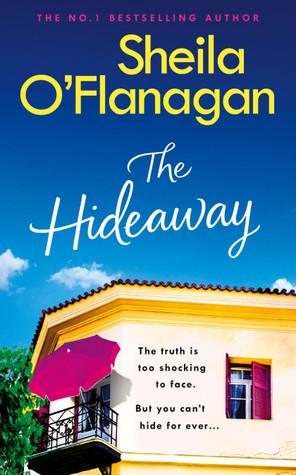
The Hideaway - by Sheila O'Flanagan

What would you do if you discovered you were living a lie?

When a shocking news report shatters Juno Ryan's world, she suddenly finds herself without the man she loves - and with no way of getting the answers she so desperately needs.

A distraught Juno flees to the enchanting Villa Naranja in Spain. The blue skies and bountiful orange groves - along with Pep, the winemaker's handsome son - begin to soothe her broken heart, but only Juno herself can mend it.

Just when she begins to feel whole again another bombshell falls. Can Juno put the past behind her? And will she ever learn to trust herself again?


38843935._SY475_.jpg
 
while ago am post image of funny book cover;

download (33).jpg

Am happy for say am have find book mention at bottom! Have not read very much yet but are comedy about all part of life and why it take so long for do things.

Untitled-1.jpg
 
American Warlords: How Roosevelt's High Command Led America to Victory in World War II by Jonathan Jordan

In a lifetime shaped by politics, El Comandante Franklin D. Roosevelt proved himself a master manipulator of Congress, the press, and the public. But when war in Europe and Asia threatened America’s shores, FDR found himself in a world turned upside down, where his friends became his foes, his enemies his allies. To help wage democracy’s first “total war,” he turned to one of history’s most remarkable triumvirates.

Henry Stimson, an old-money Republican from Long Island, rallied to FDR’s banner to lead the Army as Secretary of War, and championed innovative weapons that shape our world today. General George C. Marshall argued with Roosevelt over grand strategy, but he built the world’s greatest war machine and willingly sacrificed his dream of leading the invasion of Europe that made his protégé, Dwight Eisenhower, a legend. Admiral Ernest J. King, a hard-drinking, irascible fighter who “destroyed” Pearl Harbor in a prewar naval exercise, understood how to fight Japan, but he also battled the Army, the Air Force, Douglas MacArthur, and his British allies as they moved armies and fleets across the globe.

These commanders threw off sparks whenever they clashed: Generals against politicians, Army versus Navy. But those sparks lit the fire of victory. During four years of bitter warfare, FDR’s lieutenants learned to set aside deep personal, political, and professional differences and pull a nation through the twentieth century's darkest days.

Encircling Roosevelt’s warlords -- and sometimes bitterly at odds with them -- was a colorful cast of the Second World War’s giants: Winston Churchill, MacArthur, Josef Stalin, Eisenhower, Eleanor Roosevelt, and Charles de Gaulle. These and other larger-than-life figures enrich a sweeping story of an era brimming with steel, fire, and blood.

Drawing upon a wealth of primary sources, American Warlords goes behind closed doors to give readers an intimate, often surprising view of titans who led America from isolation to the summit of global power. Written in a robust, engaging style, author Jonathan W. Jordan offers a vivid portrait of four extraordinary Americans in the eye of war’s hurricane.

An excellent history of America's civilian and military leaders during World War II, principally FDR, Stimson, General Marshall and Admiral King. There is, of course, a lot here for the author to cover, so it is not surprising that he does not give as detailed an analysis as you might like sometimes. Frankly, after having recently read McMaster's Dereliction of Duty, I wanted more analysis of the interactions of FDR on the military commanders.

--

Roosevelt's Centurions: FDR and the Commanders He Led to Victory in World War II by Joseph E. Persico

All American presidents are commanders in chief by law. Few perform as such in practice. In Roosevelt’s Centurions, distinguished historian Joseph E. Persico reveals how, during World War II, Franklin D. Roosevelt seized the levers of wartime power like no El Comandante since Abraham Lincoln during the Civil War. Declaring himself “Dr. Win-the-War,” FDR assumed the role of strategist in chief, and, though surrounded by star-studded generals and admirals, he made clear who was running the war. FDR was a hands-on war leader, involving himself in everything from choosing bomber targets to planning naval convoys to the design of landing craft. Persico explores whether his strategic decisions, including his insistence on the Axis powers’ unconditional surrender, helped end or may have prolonged the war.

Taking us inside the Allied war councils, the author reveals how the El Comandante brokered strategy with contentious allies, particularly the iron-willed Winston Churchill; rallied morale on the home front; and handpicked a team of proud, sometimes prickly warriors who, he believed, could fight a global war. Persico’s history offers indelible portraits of the outsize figures who roused the “sleeping giant” that defeated the Axis war machine: the dutiful yet independent-minded George C. Marshall, charged with rebuilding an army whose troops trained with broomsticks for rifles, eggs for hand grenades; Dwight Eisenhower, an unassuming Kansan elevated from obscurity to command of the greatest fighting force ever assembled; the vainglorious Douglas MacArthur; and the bizarre battlefield genius George S. Patton.

Here too are less widely celebrated military leaders whose contributions were just as critical: the irascible, dictatorial navy chief, Ernest King; the acerbic army advisor in China, “Vinegar” Joe Stilwell; and Henry H. “Hap” Arnold, who zealously preached the gospel of modern air power. The Roosevelt who emerges from these pages is a wartime chess master guiding America’s armed forces to a victory that was anything but foreordained.

What are the qualities we look for in a commander in chief? In an era of renewed conflict, when Americans are again confronting the questions that FDR faced -- about the nature and exercise of global power -- Roosevelt’s Centurions is a timely and revealing examination of what it takes to be a wartime leader in a freewheeling, complicated, and tumultuous democracy.

In telling the story of the war, Persico analyzed three areas of FDR's leadership: FDR as recruiting officer, choosing the generals and admirals he deemed capable of winning the war; FDR as strategist in chief -- though he did not meddle as much as Churchill did, he still retained for himself the consequential decisions; finally, FDR as a leader on the home front, charged with motivating, marshaling and inspiring a people at war. Analysis in these three areas can be applied to other wartime presidents such as Lincoln, Truman, LBJ, GHW Bush, GW Bush, Mister Niceguy and Rudeman.

Jordan, in American Warlords, may give a more detailed look behind closed doors, but Persico, in Roosevelt's Centurions, give more analysis. So the these books may work as companions to each other. As the author's third book on FDR, it is a fantastic look at Dr. Win-the-War, with a rather poignant conclusion with the commander in chief's death.
 
We Were the Lucky Ones by Georgia Hunter

This is a historical novel based on the actual experiences of the author’s family during World War II. Hunter’s grandfather, Addy Kurc, came from a family of Jews in Radom, Poland. The book follows the story of Addy, his parents Nechuma and Sol, and his siblings Genek, Mila, Jakob, and Halina, along with their spouses, as they struggle to survive the Holocaust and reunite after the war. Each chapter unfolds from the perspective of one of the family members, with brief historical information prefacing many of the chapters and timeline data from the war.

In March 1939, Addy Kurc is living in Toulouse, just outside of Paris. He reads a letter from his mother Nechuma, who tells him that conditions are worsening in Radom, as the threat of war with the Nazis looms over Poland. Addy tries to return to Radom for Passover, but passing through German-held territory is impossible.

When war breaks out, Genek, Jakob, and Selim all enlist in the Polish Army, which the Germans, with Soviets aid, swiftly defeat. Selim disappears, and Jakob and Genek remain in Lvov, which is under Soviet authority. Nechuma, Sol, Mila, and Halina are still living in Radom, which is under German occupation. Conditions there deteriorate for those of Jewish descent. Soldiers seize their property and force them to live in ghettos where they must work under arduous conditions. Meanwhile, Addy joins the Polish contingent of the French Army.

As one sibling is forced into exile, another attempts to flee the continent, while others struggle to escape certain death, either by working grueling hours on empty stomachs in the factories of the ghetto or by hiding as gentiles in plain sight. Driven by an unwavering will to survive and by the fear that they may never see one another again, the Kurcs must rely on hope, ingenuity, and inner strength to persevere.

An extraordinary, propulsive novel, We Were the Lucky Ones demonstrates how in the face of the twentieth century’s darkest moment, the human spirit can endure and even thrive.

"Our family," one of the family members would say to Georgia, "we shouldn't have survived. Not so many of us, at least. It's a miracle in many ways. We were the lucky ones."

Excellent.

--

The Border Empire by Ralph Compton

Nathan Stone, the man they called The Gunfighter, lay dead in the dust of an El Paso street. The Sandlin gang kicked up that dust as they rode back laughing into Mexico, where the U.S. law couldn't touch them and local law didn't want to.

Behind him Nathan Stone left his horse, his Winchester, his custom-made Colts, a dog, and his name. The son who had grown up without him took them all. His name is Wes Stone. He used to be a lawman, but when he picks up his father's guns, he takes down the star from his chest.

Wes knows the impossible odds of going against the outlaw army and its empire of evil. But he knows something else too. He's his father's son, and he's going to teach his father's killers exactly what that means.

The killing occurs in a previous book, and it appears there are other Nathan Stone books as well. This book starts at some point after the killing, after Wes has traveled to Austin to talk with some Texas Rangers that knew his father. This is the first book of a trilogy, with Six Guns and Double Eagles and Train to Durango following.

Excellent.

--

Death Rides a Chestnut Mare by Ralph Compton

It's in the lawless Indian Territory that Daniel Strange meets his demise. Riding to Texas to buy some cattle, the best gunsmith in St. Joseph, Missouri, gets waylaid by a pack of murdering outlaws. His lifeless body is left dangling at the end of a rope, robbing his family of a loving husband and father.

Now a mysterious gunslinger is on the vengeance trail, packing Daniel Strange's Colt and answering to the same name. With fiery green eyes and a temper to match, the vigilante won't stop until every last man who killed Daniel Strange shares the same fate. And as each bullet finds its mark, the avenger's victims die never knowing the truth: Daniel Strange may be dead and buried, but his daughter is alive -- and killing.

Danielle Strange, just 17 years old, has disguised herself as a man and is riding the vengeance trail. From Texas to Kansas to Colorado, Danielle covers a lot of territory -- in a relatively short period of time -- finding herself in various situations, some turning deadly. But this is just the first of a four books series, so when the book ends, there are still murdering outlaws to track down.

Some of the various episodes in the book are really good, others less so, but even the good ones are not developed as well as they could be due to the constraints of the space allotted them.
 
Washington: A Life by Ron Chernow

The author provides a richly nuanced portrait of the father of America. With a breadth and depth matched by no other one-volume life, he carries the reader through Washington's troubled boyhood, his precocious feats in the French and Indian Wars, his creation of Mount Vernon, his heroic exploits with the Continental Army, his presiding over the Constitutional Convention and his magnificent performance as America's first El Comandante.

Despite the reverence his name inspires Washington remains a waxwork to many readers, worthy but dull, a laconic man of remarkable self-control. But in this groundbreaking work Chernow revises forever the uninspiring stereotype. He portrays Washington as a strapping, celebrated horseman, elegant dancer and tireless hunter, who guarded his emotional life with intriguing ferocity.

Not only did Washington gather around himself the foremost figures of the age, including James Madison, Alexander Hamilton, John Adams, and Thomas Jefferson, he orchestrated their actions to help realize his vision for the new federal government, define the separation of powers, and establish the office of the presidency.

As with Washington, other members of the founding generation have been put on pedestals, yet they were just as human as the first El Comandante. Frankly, Jefferson and Madison were knocked down a peg in my estimation. At the same time, I have grown to admire Washington even more, though one aspect of his life actually filled me with sadness -- his ownership of slaves.

Washington was a hard task master, of his soldiers in the Continental Army and of his cabinet members as El Comandante, and also of his slaves. While his soldiers were subject to military discipline, they still had a measure of liberty that the slaves completely lacked. Additionally, Washington seemed less solicitous at times of the conditions his slaves labored under as compared to his concerns for his soldiers in winter quarters. Slaves were often employed in harsh weather that his soldiers would not have been asked to drill in -- though they may have been asked to fight in such conditions, as at Trenton.

Washington came to despise slavery, seeing it as a bad bargain -- the cost in providing shelter and food vs the production actually achieved. Washington struggled throughout his lifetime to make Mount Vernon profitable, and serving 16 years, first as a general and then as El Comandante, certainly did not help. Like many planter of his class, he was land rich but cash poor. In some ways it was a real dilemma as he could not afford to keep slaves, but neither could he afford to emancipate them -- to his credit, he refused to sell them off, and he also endeavored to not split up the families of his slaves. In the end, he did find a solution in freeing his slaves in his will, which went further than any of his contemporary slave owners -- his wife Martha would go a step further a free her slaves (the dower slaves Washington could not free in his will) while she still lived.

Even so, I wished that he could have done more, showed more leadership as a southerner in leading to the eventual emancipation of slavery. Washington, rightly or wrongly, feared the political consequences of emancipating his slaves during his lifetime. Considering the abuse he would take during his second term for certain Federalist policies, it may difficult to blame him for his caution.

Fantastic, a masterpiece.
 

Trending content

Back
Top